The AI aimbot wave: why external cheating looks different in 2026
In 2020, if you wanted to cheat in Valorant or CS2 without risking a ban wave, you had three options: quit, get good, or spend a small fortune on a weird hardware setup that most of the cheating community didn't understand.
In 2026, that third option is something people talk about openly in Discord DMs.
What actually changed
Two things, back to back.
Kernel-level anti-cheats got uncrackable. Vanguard, Faceit's newer AC stack, BattlEye's deeper kernel hooks. By 2024, internal cheats weren't "harder to make", they were on borrowed time from the moment they shipped. Multiple major cheat providers shut down between late 2023 and 2025 after their loaders got detected or their developers got doxxed.
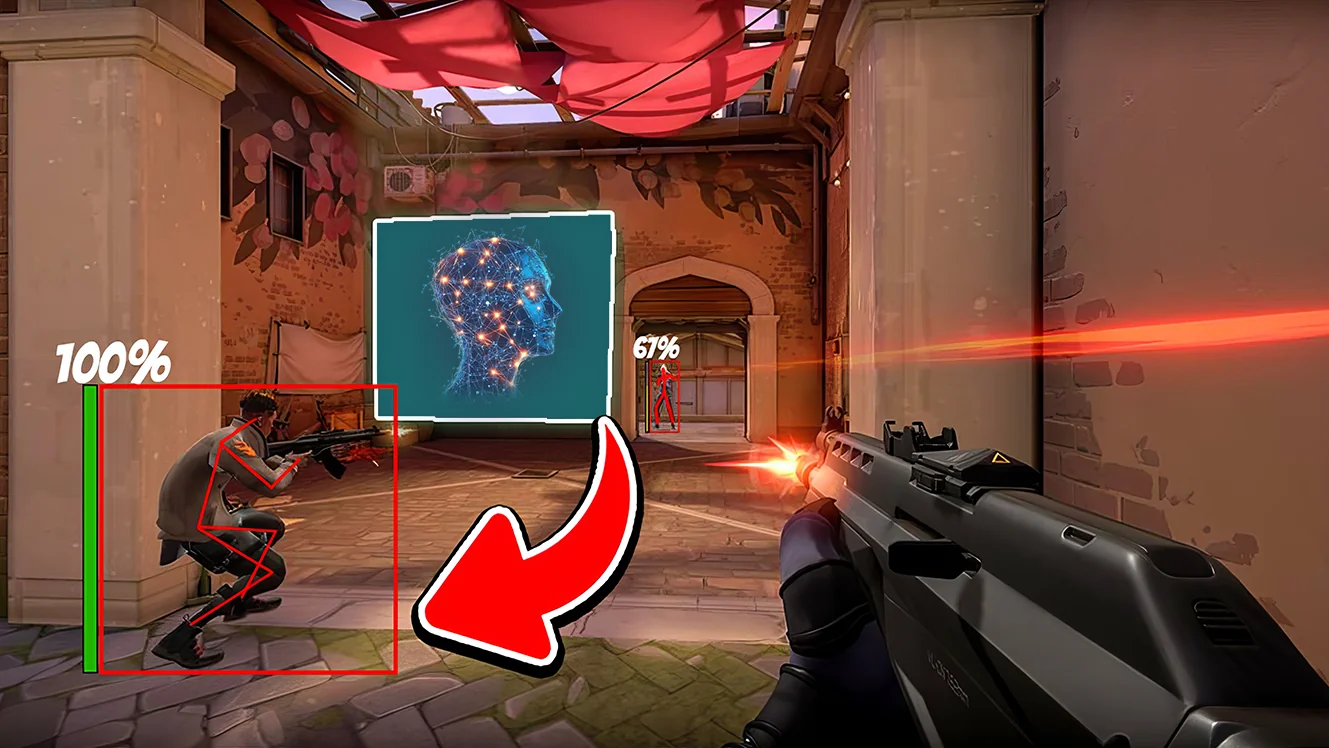
Computer vision got cheap. Training a YOLO-style enemy-detection model on gameplay footage used to require a research-grade setup. Now it fits on a mid-range GPU, trains overnight, and runs at 240fps on consumer hardware.
Combine those and you get the category we're in now: hardware capture cards sending game footage to a second PC that runs a custom AI model, which sends aim adjustments back through a hardware aim device as real mouse input. No software on the gaming PC. No anti-cheat visibility. No detection surface.
Why this became a viral moment
Three reasons.
YouTube. Creators started publishing gameplay footage of 2PC AI aimbot setups, not always to promote a specific provider but to show the technology. "Look at this, it's tracking the player model from pixel data alone." View counts spiked.
Ban waves hit internal cheats hard. When a provider gets caught, thousands of banned players go looking for alternatives. The "what do I buy now" thread on cheating subreddits kept circling back to the same answer: external AI is the only safe thing.
The price came down. Early 2PC AI aimbots were €200+/month. By 2025 to 2026, market entrants pushed day-pass pricing into the €10 to €15 range. Weekend players could afford to try it.
What this means if you're shopping right now
The space is crowded. There are 20+ providers selling AI aimbots of varying quality. Good ones and garbage ones. Things to check before you hand over crypto:
- Does their site explain the architecture clearly? If they're vague about what actually runs where, there's usually a reason.
- What hardware do they support? Stick to providers that work with Ferrum (and MAKXD at launch). Obscure aim devices mean obscure support.
- How long have they been running without detections? "Zero detections" claims from a provider that launched 3 months ago don't mean much. The real test is whether they survive a Vanguard update cycle.
- Do they have a real support channel? Discord servers that live for more than 6 months are a good sign. Telegram groups that disappear every 2 weeks aren't.
Where this goes next
Near-term: more providers, more competition, prices keep drifting down.
Mid-term: anti-cheats will start investing in motion-statistics detection (looking at how the mouse moves rather than what's reading memory). Cheats will respond by training on even more human-like input profiles. The arms race shifts from architecture to statistics.
Long-term: this stays an arms race, but hardware-external cheating is the current equilibrium because the alternative (kernel-level internal cheats) has effectively lost. That equilibrium holds until someone figures out how to make anti-cheats that see through HDMI cables, which probably isn't happening.
If you're watching this space, the next 12 months are about motion realism and per-game AI tuning, not about architectural changes. The architectural war is already decided.